GDPR: where personal data is, and who can reach it
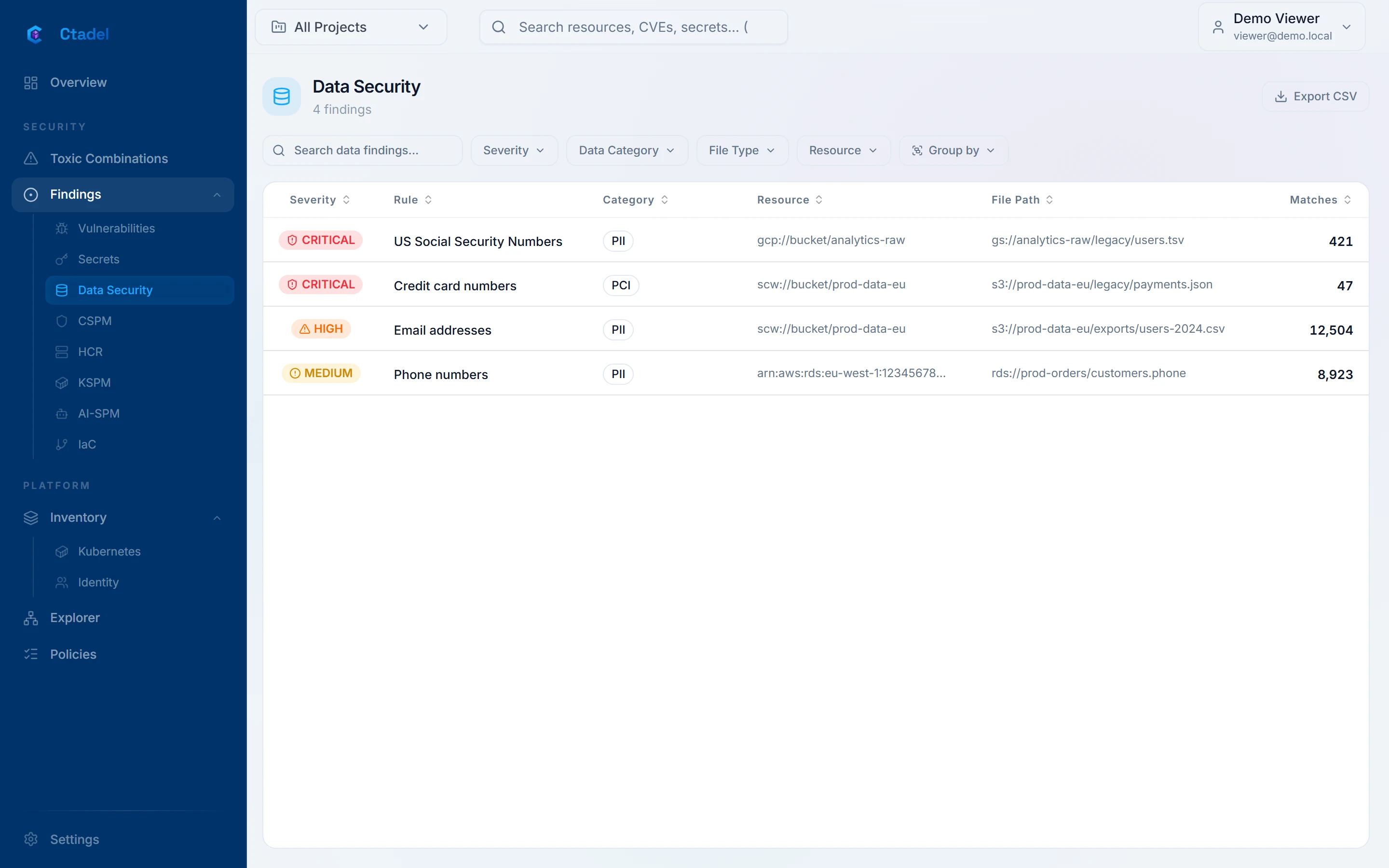
Article 32 requires appropriate technical measures: encryption, confidentiality, resilience. Before proving them, you need to know where the data is. Ctadel spots it in your buckets and databases, then shows who reaches it and by which path.
The Data scanner spots personal, banking and health data in object storage and databases, by category, with masked excerpts. Configuration rules check encryption, public exposure and logging. Effective permissions say who can read a resource. Attack paths connect an exposure to a piece of personal data.
Article 32 cited on the findings concerned
Snapshots and backups shared outside the account detected
Ctadel itself hosted in France, a single European subprocessor
Evidence
Export of findings with data categories and references, history, audit log. The trust centre describes Ctadel’s own processing for your records.
What Ctadel does not do
Every rule in the catalogue cites the controls of the frameworks it covers. Those references appear in the detail panel of each finding and export with them. Reports per framework are under internal validation; Ctadel claims no certification for itself.
Ctadel reads only excerpts and does not keep the content of the personal data found.
See it on your accounts
The online demonstration is open to all, on fictitious data. For an instance on your own accounts, request a demonstration.