
Attack paths
Attack paths, not a pile of alerts
An isolated alert rarely says whether a resource is reachable. Ctadel connects exposures, permissions, data and vulnerabilities in a graph and reports only the sequences of findings that lead somewhere, with the link to break.
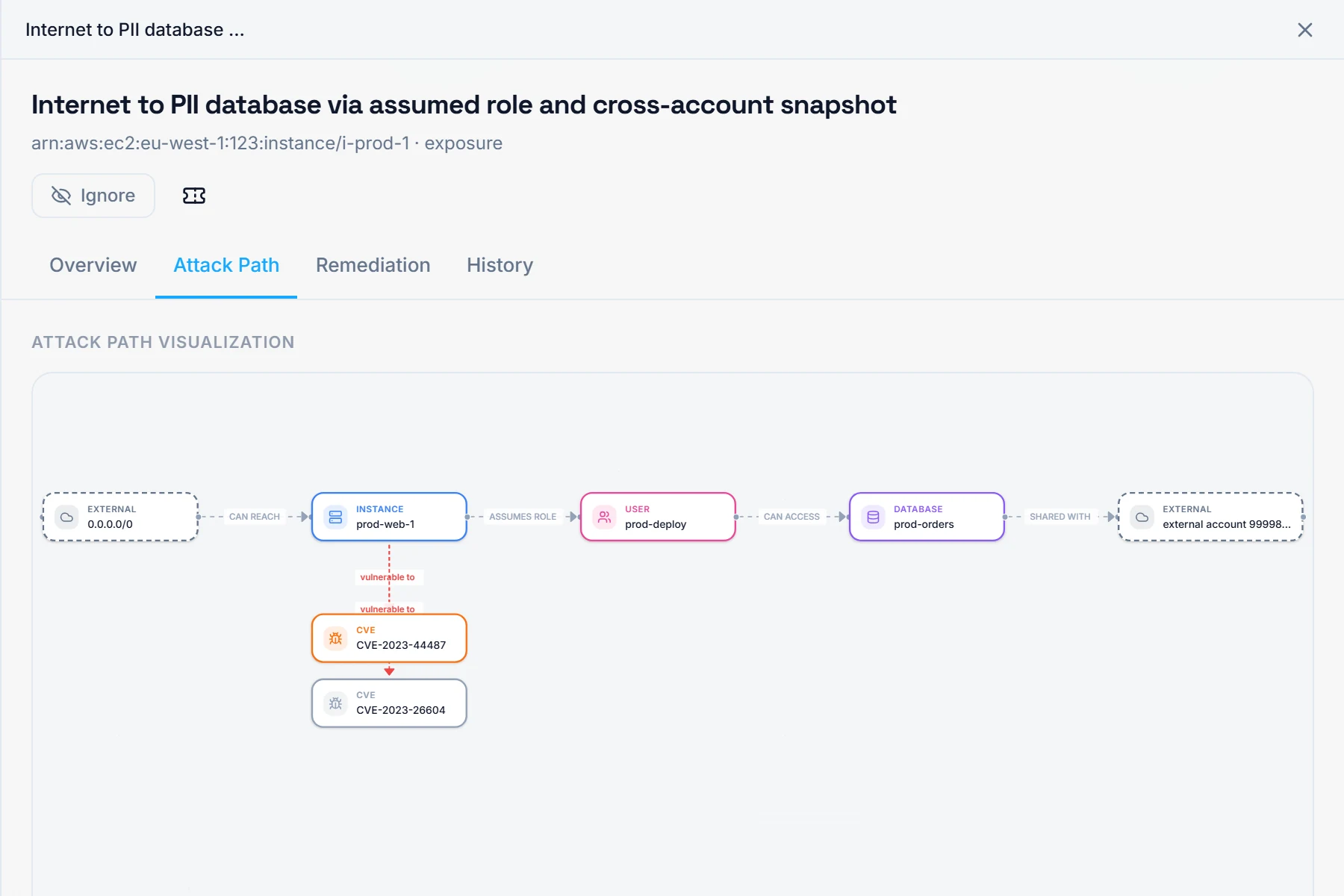
- What is read
- Exposures, permissions, sensitive data and vulnerabilities linked in the graph.
- How
- Hand-written chains and computed paths over the graph; every link is a real resource.
- In the application
- Attack paths page: chain visualised step by step, score, remediation, fix proposed by the assistant.
What it cannot see. A path is only reported when each of its links has been collected. A resource outside the scope breaks the chain.
Example detections
- Internet to a personal-data database via an assumed role and a shared snapshot
- Public machine with a critical CVE that leaks database credentials
- Internet-facing function that reads a sensitive bucket
The other modules
Ready to see this module on your accounts?
The public demonstration runs on fictitious data. For an instance on your own accounts, request a demonstration.